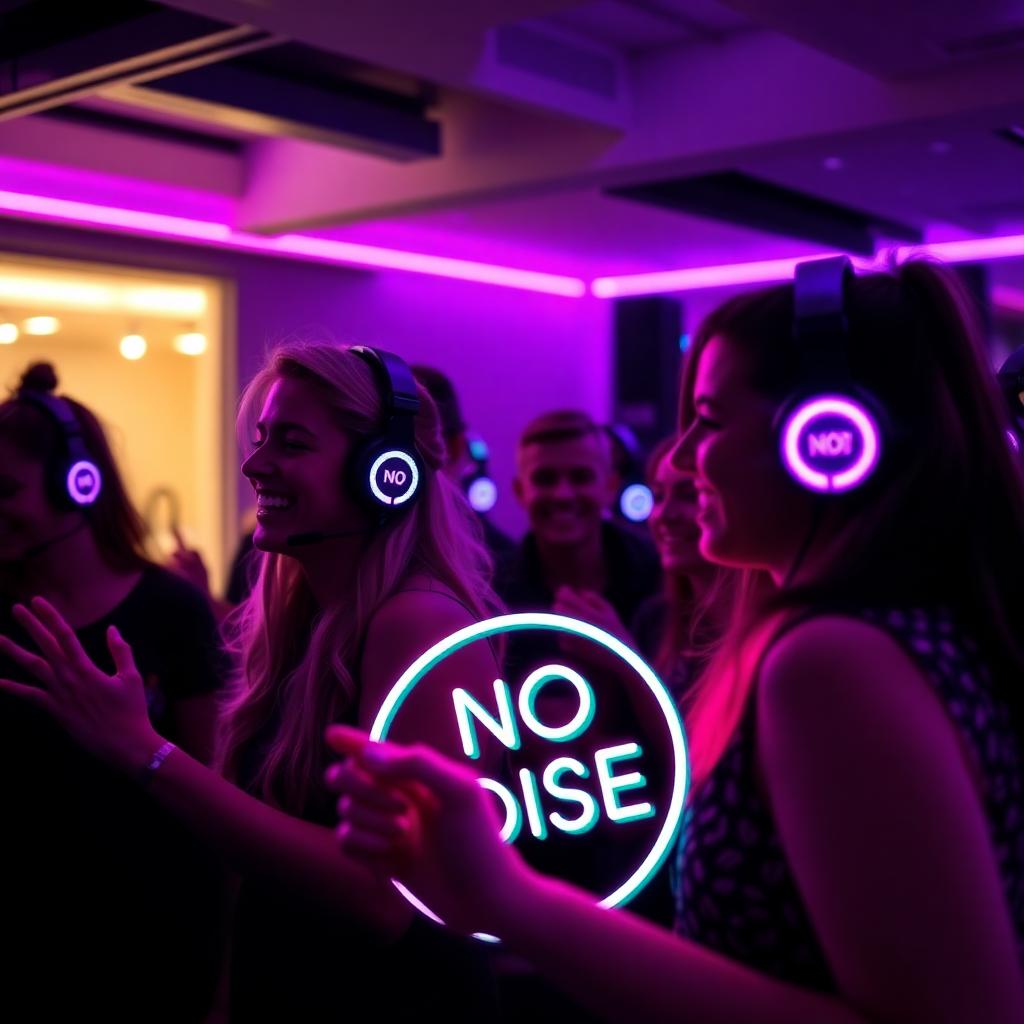
Corporate team building has a bad reputation for a reason: too many away days are a procession of trust falls, escape rooms and awkward small talk. Silent disco is different — it's genuinely fun, it involves the whole team at once, and it's the rare activity where the introverts, the extroverts and the reluctant middle managers all end up participating equally.
Why silent disco works for team building
- It flattens hierarchy in about ninety seconds. The MD in glowing headphones looks exactly as ridiculous as the new starter. That levelling effect is hard to fake.
- Quieter colleagues can join without spotlight pressure. Because everyone's wearing headphones, nobody is being watched or judged for their dance moves.
- Three channels create instant sub-groups. People bond fast when they discover a colleague on the same channel — it's an accidental icebreaker.
- No PA means people can still talk. Colleagues who don't dance can chat next to the dancefloor at normal volume — you don't lose the introverts to a quiet corner.
Best formats for team building
1. The "away day finale" (60–90 minutes)
Run your workshop, walk, food or activity through the day, then finish with a silent disco. This is the most common format we deliver — colleagues are already loose, the mood is celebratory, and the silent disco becomes the memorable bit everyone talks about at Monday standup.
2. The "channel battle" (2 hours)
Split the team into three sub-teams and give each team a channel. Halfway through, run a public vote for the "team with the best dancefloor". It sounds silly. It works. People genuinely rally around their channel.
3. The "silent disco fitness" session (45 minutes)
For active teams: a lightweight guided dance workout via headphones. Instructor demos on stage, team follows via the headphone feed. No sweaty PA, no shouty instructor. Works particularly well outdoors in Devon in summer.
Don't schedule the silent disco first thing. Colleagues need at least one prior shared activity — even just lunch — before they'll relax enough to enjoy it. Save it for after the ice has already broken.
Group size — what actually works
- Under 15 people: Silent disco is possible but a bit sparse. Combine with another activity or venue.
- 15–40 people: The sweet spot. Small enough that everyone knows each other, big enough for a proper dancefloor.
- 40–80 people: Runs brilliantly. Consider adding a second transmitter if you want independent "quiet" and "party" zones.
- 80+ people: Absolutely fine but treat it as a company party rather than pure team building.
Music choices that actually land
Avoid three channels of "same but slightly different". The whole point is variety, so lean into contrast:
- Channel 1 — Current party: chart, pop, dance. Broadly familiar.
- Channel 2 — Throwback anthems: 90s and 00s crowd-pleasers.
- Channel 3 — Wildcard: something with personality. 80s power ballads. Cheesy Eurovision. Guilty-pleasure disco. The "wildcard" channel is nearly always the one people talk about the next morning.
Practical tips for the organiser
- Confirm venue power (one socket near the transmitter is all we need).
- Include a two-line explainer in the invite so nobody arrives confused.
- Book an on-site operator — you shouldn't be dealing with kit on the day you're hosting.
- Warn colleagues to wear something they can dance in. It matters more than you'd think.
- Don't over-schedule the evening. An hour of silent disco is often better than two.
Cost expectations
For most Devon corporate team-building events, budget for a 25–50 headphone package plus an on-site operator, delivered free within our Devon coverage. Add lighting for £20 per unit if you want the room to feel like a proper night out rather than a lit meeting room.