This is the honest version of the comparison. We hire silent disco kit for a living, but a traditional DJ absolutely still wins in some situations — and pretending otherwise is what gives silent disco companies a bad name.
Where silent discos beat traditional DJs
Venues with noise limits
Barns, country estates, marquees, village halls and most rural wedding venues in Devon have a sound curfew — usually 11pm or midnight — enforced by a noise limiter that cuts the DJ's power if the room gets too loud. A silent disco has no speaker output at all, so the limiter never triggers and you can dance as late as your venue allows.
Mixed-age guests
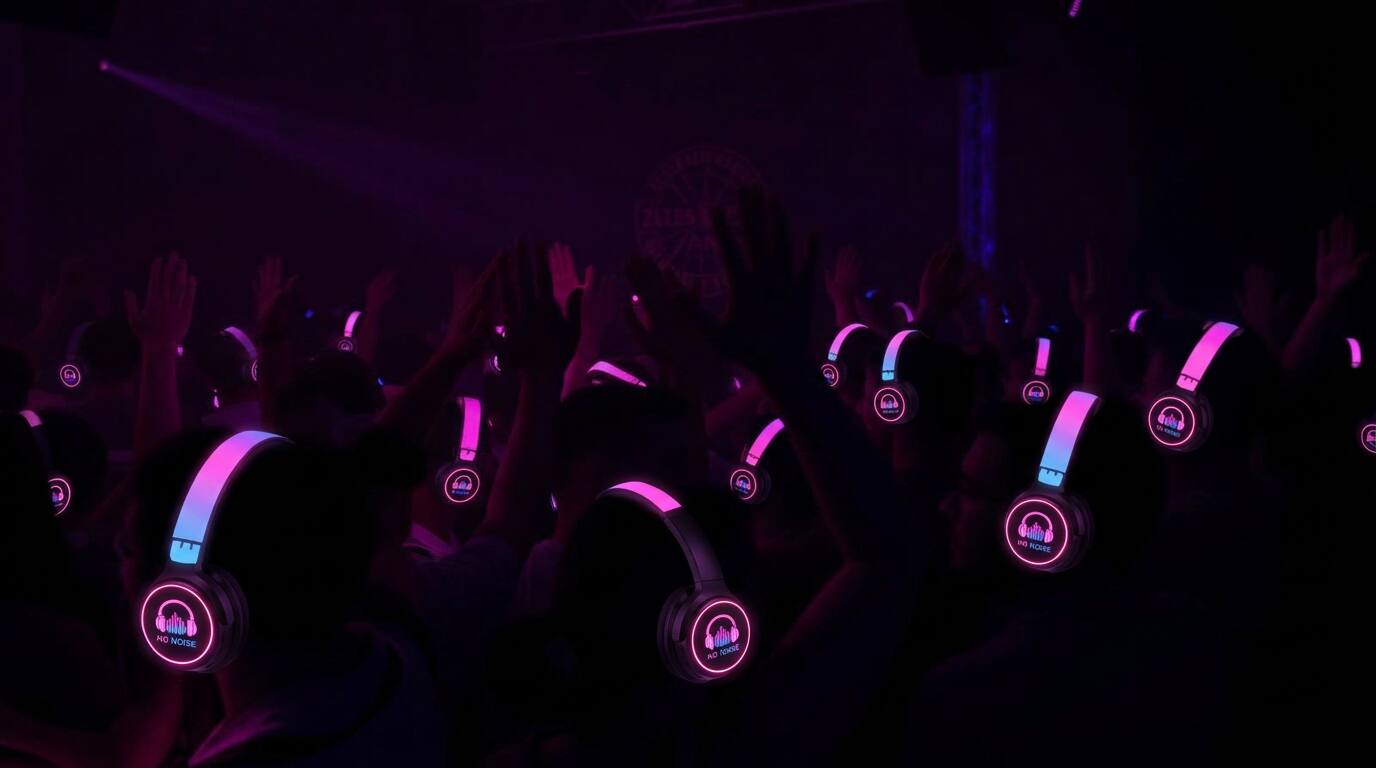
The perennial wedding problem: your parents' friends want Motown, your uni friends want 2010s indie, your cousins want current chart. A single DJ playlist can only please one of those groups at a time. Three channels solve it — every group gets their taste of the night simultaneously.
Outdoor events
Gardens, beaches, courtyards and outdoor marquees are almost always a neighbour-relations minefield with a PA. Silent discos remove the problem completely — the loudest thing in the garden is the laughter.
You want to dance late
Because there's no speaker noise leaving the room, silent discos routinely run past midnight without a single complaint. Traditional DJs usually can't.
A silent disco doesn't replace live music — a live band or acoustic ceremony set still needs a PA. Silent disco kit is specifically for the dancefloor portion of the evening.
Where a traditional DJ still wins
You've got one music taste and love it loud
If it's a 30th birthday and everyone's there for one genre, a live DJ reading the room in real time is genuinely brilliant. Silent disco channels are usually pre-planned playlists — they're flexible, but they don't riff off the crowd the way a good DJ does.
You want a full-room, chest-thumping sound
Headphones sound great, but they don't shake the floor. If bass in the chest is the memory you want, hire a proper PA.
You want an MC-led experience
Introductions, first-dance announcements, birthday shout-outs — a DJ with a mic handles these seamlessly. It's possible on a silent disco (announce over one channel with everyone tuned in), but it's less natural.
Cost — the honest numbers
In Devon, a professional wedding DJ typically costs £400–£800 for a full evening once travel and setup are included. A silent disco from No Noise starts at £129 for 25 headphones and runs to £259 for 100 — with free countywide delivery. Even adding an on-site operator at £20/hour, the total usually comes in well below a live DJ.
The exception: if you want a DJ for a specific music style they specialise in (Northern Soul, drum & bass, classic hip-hop), the DJ's cost is buying their knowledge, not their equipment. That's genuinely worth paying for.
Can you have both?
Yes — and it's brilliant. A common setup is: live band for the first hour, traditional DJ from 9pm until the venue's music curfew, then swap to silent disco for the late crowd who want to keep going. You get all the live-DJ atmosphere early and the silent disco lets you push past the noise limit.
Short version
- Barn/marquee wedding, mixed-age crowd, wants to dance past midnight → silent disco.
- Outdoor party, close neighbours → silent disco.
- Kids party (any age) → silent disco (volume-controlled).
- Nightclub-style single-genre event, no curfew → traditional DJ.
- School disco, prom, sixth-form social → silent disco.
- Big-band-era or live-instrument feel → live band, not silent disco.
Not sure which side you fall on? Get in touch with your event type and we'll give you an honest answer — even if it means recommending a DJ instead.